Complementary food food allergy chart
90% of infants and young children's allergies to complementary foods are concentrated in the 8 categories of highly allergenic foods announced by the WHO. Complementary food additions are tried in the order of "low risk → medium risk → high risk". Adding one new food at a time, observing for 3-5 consecutive days without any abnormalities, and then switching to the next one are safety guidelines that have been verified by domestic and foreign guidelines.
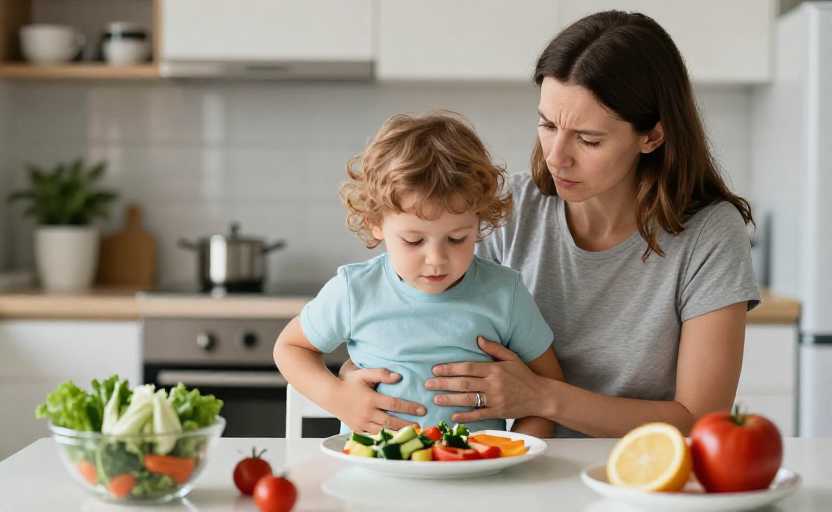
In the three years I have been working as a childcare and feeding guide, I have come across too many novice parents who have fallen into trouble. Last week, a mother from Hangzhou came to me and said that her baby had just turned 6 months old. On the first day of supplementary food, she gave her half a strawberry. Her mouth turned red that day and she had diarrhea twice. She was so panicked. In fact, she did not understand the allergy risk levels of different foods in advance and messed up the order.
Let’s first talk about the low-risk grades that everyone is most assured of. These are recommended for babies who have just started to feed complementary foods. The allergy rate is generally less than 1%: high-speed iron rice noodles, pumpkin, sweet potato, yam, carrot, cauliflower, apple, pear, banana, avocado. Among the hundreds of babies with normal constitutions that I have dealt with, I have almost never encountered anyone with severe allergies. At most, some babies have black strings in their stools after eating bananas. That is the fiber of bananas, not allergies, so don’t be nervous. Of course, there are extreme exceptions. I have encountered a child who was allergic to apples before, but the probability of this is about one in ten thousand. There is no need to rely on individual cases to rule out everything.
Next is the medium-risk category. The allergy rate is about 1%-10%. It is recommended that the child is 7-8 months old and has eaten more than 5 types of low-risk foods with no abnormalities before trying them: egg yolk, spinach, kiwi, strawberry, cod, squid, chicken, pork, orange, tomato. It should be mentioned here that there has been controversy about the time for adding egg yolks. The old version of the feeding guide recommended adding eggs after 8 months of age, but the 2022 version of the "Dietary Guidelines for Chinese Residents" has advanced the time for adding egg yolks to 7 months of age. My own experience is that if the family No one has a history of food allergies, and the baby does not have recurring eczema. There is no problem at all when trying it at 7 months old. For the first time, add 1/8 egg yolk and mix it into the rice noodles. If there is no reaction after 3 days, just increase the amount. If you have a sensitive constitution, it is safer to push it to after 8 months old.
The high-risk category is the 8 categories of highly allergenic foods clearly listed by the WHO. The allergy rate is generally above 10%. It is recommended that babies with ordinary constitutions be at least 12 months old before trying them. Those with a family history of allergies or who are allergic are recommended to try them in small doses after 12 months of age under the guidance of a doctor: egg whites, milk, peanuts, nuts (walnuts, cashews, etc.), wheat (noodles, steamed buns, etc.), soybeans (tofu, soy milk, etc.), shelled seafood (shrimp, crab, shellfish), mangoes. There is also a controversial point here. In the past few years, everyone thought that high-risk foods should be added as late as possible. However, in recent years, new studies in Europe, America and China have found that as long as the baby does not have severe allergic eczema, small-dose exposure to high-risk foods around 10-12 months of age can actually help the baby establish oral immune tolerance and reduce the probability of long-term allergies. I had a client's child whose parents both suffered from allergic rhinitis. Following the doctor's advice, he started to feed peanut butter in small amounts at the age of 11 months. Now he is 3 years old and is not allergic to peanuts at all. On the contrary, there is a child in the same neighborhood who has never touched peanuts until he was 2 years old. He was allergic to peanut butter for the first time and went to the hospital. Of course, this is not for everyone to try blindly. The premise is that your child has not had any problems before adding low- to medium-risk foods, and the first time you add it, you must add less. For example, dig out an amount of peanut paste as big as a fingernail and mix it in the rice. Observe for 5 days if there is no reaction, then slowly increase the amount. If you are not sure, it is safer to do a food allergen screening first.
Many new parents also have misconceptions about allergies. Don’t think that only a rash all over the body is an allergy. Many mild allergic reactions are very subtle: for example, after adding new food, the child frequently rubs his eyes and nose, a small red rash on the mouth that disappears within half an hour, blood streaks or mucus in the poop, sudden crying in the middle of the night and uneasy sleep, and diarrhea for two or three days in a row. These may be signs of mild allergies. I once met a mother whose baby had diarrhea for 10 days after adding wheat noodles. She always thought it was a cold, but she stopped taking the noodles for two days and was fine, and then she realized it was an allergy.
Don’t go to the other extreme: giving your baby only two or three low-risk foods because you’re afraid of allergies. I once saw a grandmother raising a baby who only ate rice noodles and pumpkin when she was one and a half years old. Not only was the baby not up to standard in terms of height and weight, but she also became severely allergic when she ate eggs for the first time. This was because the intestines had not been exposed to enough food stimulation for a long time and could not build tolerance, making the baby more susceptible to allergies. Also, don’t put this food on the blacklist and avoid eating it for the rest of your life as soon as you find out you are allergic. Most food allergies are temporary. For example, 80% of children allergic to milk and eggs will develop tolerance on their own by the age of 3. You can take your baby to have allergens checked every year. As long as they are no longer allergic, you can slowly add them back.
To be honest, this allergy chart is not meant to set rules for everyone. After all, every baby’s body is different. Some babies can eat anything from childhood with no problems, and some babies can get rashes even if they eat pumpkin. There is no need to compare the progress with other children, and there is no need to stick to the list on what day to add. Try small doses and observe carefully.
Disclaimer:
1. This article is sourced from the Internet. All content represents the author's personal views only and does not reflect the stance of this website. The author shall be solely responsible for the content.
2. Part of the content on this website is compiled from the Internet. This website shall not be liable for any civil disputes, administrative penalties, or other losses arising from improper reprinting or citation.
3. If there is any infringing content or inappropriate material, please contact us to remove it immediately. Contact us at: