Dietary taboos for patients with cerebral infarction
Absolutely prohibit foods that can directly damage blood vessels and induce sudden increases in blood pressure and blood lipids. Strictly control the intake of foods that can easily increase the metabolic burden on blood vessels. Avoid personalized high-risk foods based on your underlying disease. There is no universal list of "no bites". All taboos revolve around the core of "reduce the risk of secondary blood vessel blockage."
Don’t think this is alarmist. Last winter when I was rotating in Shenai, I treated Uncle Zhang who had a recurrence. The first attack half a year ago was just a little numbness in his left hand and foot. When he was discharged from the hospital, he was told to keep his mouth shut. After winter came, he felt that he was recovering like a normal person. , I would go out to a restaurant with my old man every day, and he would eat pork elbows and sausages, and always said, "Drink two taels of white wine to activate blood circulation." As a result, one morning, half of my body was paralyzed when I woke up, and I was sent here to check that the blood vessels in my brain were more clogged than last time. After I was rescued, my left hand never recovered to the point where I could hold a cup.
The first thing to mention is the absolute taboos that have been unanimously agreed upon by the nutrition community: foods containing trans fatty acids and excessive alcohol. The trans fatty acids in bread cakes made of shortening, repeatedly fried skewered fried chicken, and commercially available non-dairy creamer drinks will actually make the blood vessel walls harden and become brittle, and reduce the stability of plaques. Regardless of whether you have recovered well or not, just don’t touch these things if you can. As for the statement that "drinking a small amount of alcohol can open blood vessels", it is purely a rumor created by alcohol sellers. Alcohol's damage to the vascular endothelium is clear. Even just one sip will pose additional risks to patients with cerebral infarction. There is really no need to take this risk.
Of course, not all "greasy" things should be beaten to death with a stick. There is still quite a controversy about the intake of saturated fat. Traditional clinical guidelines have always recommended that patients with cerebral infarction eat as little as possible foods with high saturated fat content such as fatty meats and lard. However, in the past two years, a small sample of follow-up studies has shown that as long as the daily intake of saturated fat does not exceed 10% of total calories, patients who exercise enough daily and whose blood lipids are controlled within the standard line for a long time can occasionally eat a bite of braised pork and drink a small bowl of lard mixed with porridge. There is no problem. I met a 72-year-old man who loved braised pork all his life. He didn't give up completely after he was discharged from the hospital. He ate half a bowl a week. His blood lipids were very stable every time he was checked again. He recovered better than many patients who dare not eat this or that. But here is a warning: this conclusion only applies to patients whose blood lipids meet the standard. If your LDL has not dropped to the value required by the doctor and you still have unstable plaques in your carotid arteries, you might as well endure it for now.
When it comes to blood lipids, we have to mention the most controversial issue of eggs. Last week, an aunt pulled me and told me that the Internet said that eating egg yolks for patients with cerebral infarction is equivalent to taking poison. She has not dared to touch egg yolks for half a year, and every time she eats eggs, she picks them out and gives them to her grandson. In fact, this really depends on the person. If your low-density lipoprotein is stable below 2.6mmol/L for a long time and there are no obvious carotid plaques, there is no problem at all with eating a complete egg a day. It is clearly stated in the "Dietary Guidelines for Chinese Residents 2022" that the lecithin in egg yolks is also good for the recovery of neurological function. But if you have excessive low-density lipoprotein and have vulnerable plaques, you really need to control the amount of egg yolks. Just eat 2-3 pieces a week. There is no need to stop eating them completely. After all, the nutrients in egg yolks cannot be replaced by many supplements.
Oh, by the way, there is another pitfall that 90% of patients have stepped on: invisible salt. Many people do use less salt when cooking, but they add a lot of light soy sauce, oyster sauce, and soybean paste. They eat porridge with pickled radish and fermented bean curd in the morning, and they also eat plums, potato chips, and ham as snacks. The sodium content in these things is terrifyingly high. There was an old man whose blood pressure fluctuated all the time, and the antihypertensive medicine was not effective even after increasing the dosage. After looking through his food diary for a week, I found that he drank porridge with two pieces of fermented bean curd every morning. The sodium content of one piece of fermented bean curd was almost 1 gram. In a day, he ate almost 5 grams of invisible salt alone. Adding the salt in vegetables, it directly exceeded the daily upper limit of 5 grams set by the WHO for patients with cerebral infarction. Later, he stopped the fermented bean curd and his blood pressure stabilized within two weeks. Don’t think that less salt is just a matter of adding less salt in cooking. The sodium hidden in snacks and seasonings is the thief that sneaks into your blood vessels.
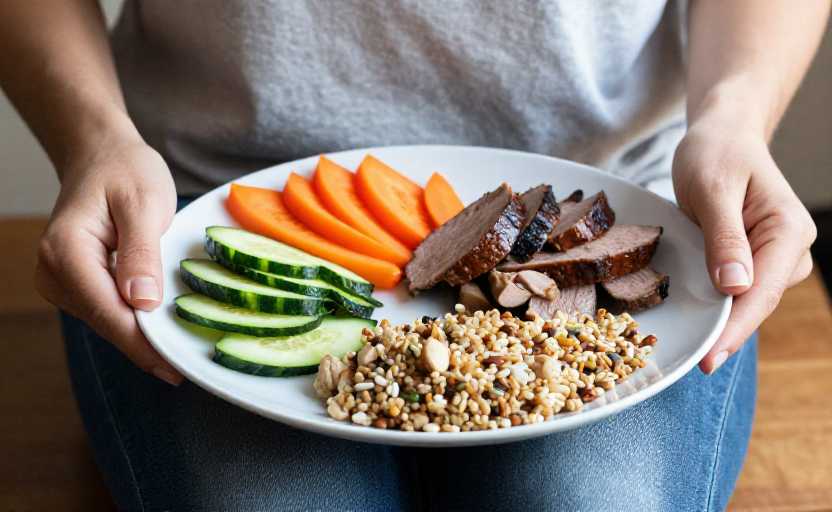
There is also a common mistake that many family members make, which is always thinking that the patient is weak just after being discharged from the hospital, so he cooks bone soup and old hen soup every day to replenish his body. The soup has a thick layer of oil floating on it, which is scary to look at. You think you are supplementing nutrition, but in fact, you are supplementing fat and purine. The blood vessels that have just recovered are already fragile. With such a supplement, blood lipids will jump up all of a sudden. It is really unnecessary. If you really want to supplement your nutrition, make more boiled lean beef, steamed fish, and fresh green leafy vegetables, which are better than any soup with thick oily red sauce.
Of course, don’t forget the personalized taboos. For patients with cerebral infarction and diabetes, sugar control has a higher priority than fat control. The amounts of milk tea, cakes, and refined rice noodles must be strictly controlled. The corrosion of blood vessel endothelium by high blood sugar is more terrible than high blood fat.; If you have gout, you should avoid seafood, animal offal, and thick soups. Otherwise, the inflammatory reaction caused by a gout attack will also increase the risk of recurrence of cerebral infarction.
In fact, there is no need to regard dietary taboos as a scourge. I have seen some patients who dare not eat this or that. In the end, they are malnourished and their recovery is slow.; I have also seen people who indulge in food and fish without any taboos, only to relapse within half a year. The core is the word "moderate". Occasionally, if you are craving for a small cake or a piece of braised pork, as long as you don't eat it all the time, and the indicators are stable every time you check again, there is no big problem. After all, being happy is important in life, right?
Disclaimer:
1. This article is sourced from the Internet. All content represents the author's personal views only and does not reflect the stance of this website. The author shall be solely responsible for the content.
2. Part of the content on this website is compiled from the Internet. This website shall not be liable for any civil disputes, administrative penalties, or other losses arising from improper reprinting or citation.
3. If there is any infringing content or inappropriate material, please contact us to remove it immediately. Contact us at: