Diet taboos for high proteinuria
There are not so many things that people with high proteinuria must not touch in their diet. There are only three core taboos - don't eat excessive amounts of high protein, don't eat high-salt foods, and don't go to extremes and starve yourself. Other precautions are based on these three taboos. You don't have to scare yourself into eating anything.
Two years ago, I helped my aunt with nephritis to monitor her diet for half a year. When she was first diagnosed with 2+ protein in her urine, she was so scared that she gave away all the eggs and milk at home. She drank white porridge with stir-fried cabbage every day. She lost 8 pounds in half a month. Not only did the protein in her urine not drop, she was also found to have hypoalbuminemia. Her face was swollen like a steamed bun. The doctor in charge scolded her, saying that she was just fooling around.
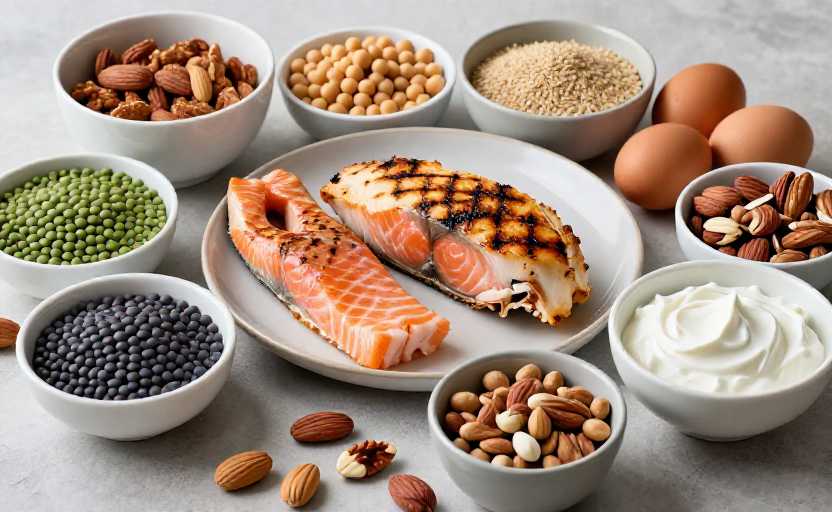
Many people have a misunderstanding about urinary protein that "if it leaks, it cannot be replenished." In fact, it is completely the opposite. Think about it, the kidneys are like a sieve. Now the sieve is broken and protein is leaking out. If you don’t provide protein at all, your body will be deprived of nutrients and the holes in the sieve will not be repaired. ; But if you stuff the pork ribs and sea cucumber hard, too much protein will pass through the kidneys, the filtration pressure will soar, and the screen will break faster. So it’s not that you can’t eat protein at all, but you need to control the total amount. People with proteinuria with normal kidney function should only eat 0.8-1g of protein per kilogram of body weight every day. If creatinine is already elevated, it should be reduced to 0.6-0.8g. Priority is given to high-quality proteins such as eggs, milk, lean meat, fish and shrimp, which are well absorbed and produce less waste products from metabolism.
Speaking of which, I have to mention the soy product controversy that everyone has been arguing about for several years. Old-school clinicians do recommend that people with high urinary protein avoid soy products. After all, early studies have shown that soybeans contain a high proportion of non-essential amino acids, which will increase the metabolic burden on the kidneys. ; However, the KDIGO Chronic Kidney Disease Guidelines updated in 2021 have long since changed their statement: Properly processed non-fermented soybean products (such as northern tofu, soft tofu, sugar-free soy milk) have a higher proportion of high-quality protein than many red meats, and lower purines than miscellaneous beans. As long as they are included in the total protein throughout the day, they can completely replace part of the red meat, and can also help lower blood lipids. They are beneficial to patients with kidney disease, and they do not need to be completely taboo. My aunt now eats tofu two or three times a week, and her urine protein has been stable at +- (weakly positive), with no problems. Of course, if you really feel uneasy, or you have high uric acid, it’s okay to eat less. You don’t have to argue about right or wrong.
Another pitfall that everyone often steps on is invisible salt. A young man in his 20s came for a follow-up consultation and said that he only dared to add 3g of salt in cooking every day, but the edema still couldn't go away. When asked, he ate a pack of plums every afternoon for afternoon tea. He also liked to drink energy drinks when he worked overtime. The salt in that pack of plums alone was almost 5g, and the sodium in the energy drinks was also a lot. In total, the daily salt intake was almost 10g, which is twice the recommended amount. If you eat too much salt, your body will store water, your blood pressure will rise, your kidneys will be overloaded, and your proteinuria will naturally not drop. Generally, people with high proteinuria should not exceed 5g of salt per day, which is about the amount of a beer bottle cap. In addition to the salt used in cooking, there is a lot of sodium in pickles, cured meats, noodles, bread, takeout salad dressings and even sodas, which must be included in the calculation.
Oh, by the way, I've seen too many cases of blind patching. I used to have an elder brother of a state-owned enterprise, and his physical examination showed that his urine protein was 1+. He heard from a friend that sea cucumber was a protein supplement, and he ate one on an empty stomach every morning. After a month of eating, he checked again. His urine protein jumped to 3+, and his creatinine also increased by almost 100. I was so scared that I stopped quickly. Things like sea cucumbers, bird's nests, and cordyceps do have high protein content, but they are essentially proteins. Eating too much will increase the burden on the kidneys. Most of the health-care protein powders on the market are soy protein isolates, which are high in purity and large in quantity. Don't drink them without medical advice. There are many cases of failure to supplement and damage the kidneys.
Of course, not everyone with high urinary protein needs to avoid eating. For example, if you just ran a marathon the day before yesterday, or you have a high fever and go to check your urine, you may also have a temporary increase in urinary protein. In this case, you can wait until your body recovers and then review it. There is no need to rush to label yourself as a "kidney disease". You don't dare to eat this or touch that.
In fact, there is really no need to regard diet as a scourge. I have seen too many people who either dare not eat anything and starve themselves out of malnutrition, or they don't care about eating anything and make the indicators a mess. The core is "degree". If you are really not sure, ask your attending doctor or clinical nutrition department to calculate the standard of daily intake that is suitable for you. It is much more reliable than searching a bunch of "10 foods you must not eat" online. After all, everyone's urine protein quantification and kidney function are different, and a plan that works for others may not be suitable for you.
Disclaimer:
1. This article is sourced from the Internet. All content represents the author's personal views only and does not reflect the stance of this website. The author shall be solely responsible for the content.
2. Part of the content on this website is compiled from the Internet. This website shall not be liable for any civil disputes, administrative penalties, or other losses arising from improper reprinting or citation.
3. If there is any infringing content or inappropriate material, please contact us to remove it immediately. Contact us at: